A Journey to Financial Truth
Most of us live in a financial system that we don’t question. We go about our daily lives, using fiat currency as a tool to buy, sell, and save without ever stopping to consider whether there’s a better way. The fiat world has conditioned us to accept a reality where money can be printed endlessly, inflation erodes our savings, and debt is the norm.
But what if there’s a better way? What if we’re stuck in a system that keeps us blind to its flaws? Many people remain trapped in this fiat reality, not because they lack intelligence or curiosity, but because they believe there’s no alternative. They accept the current system as the only truth.
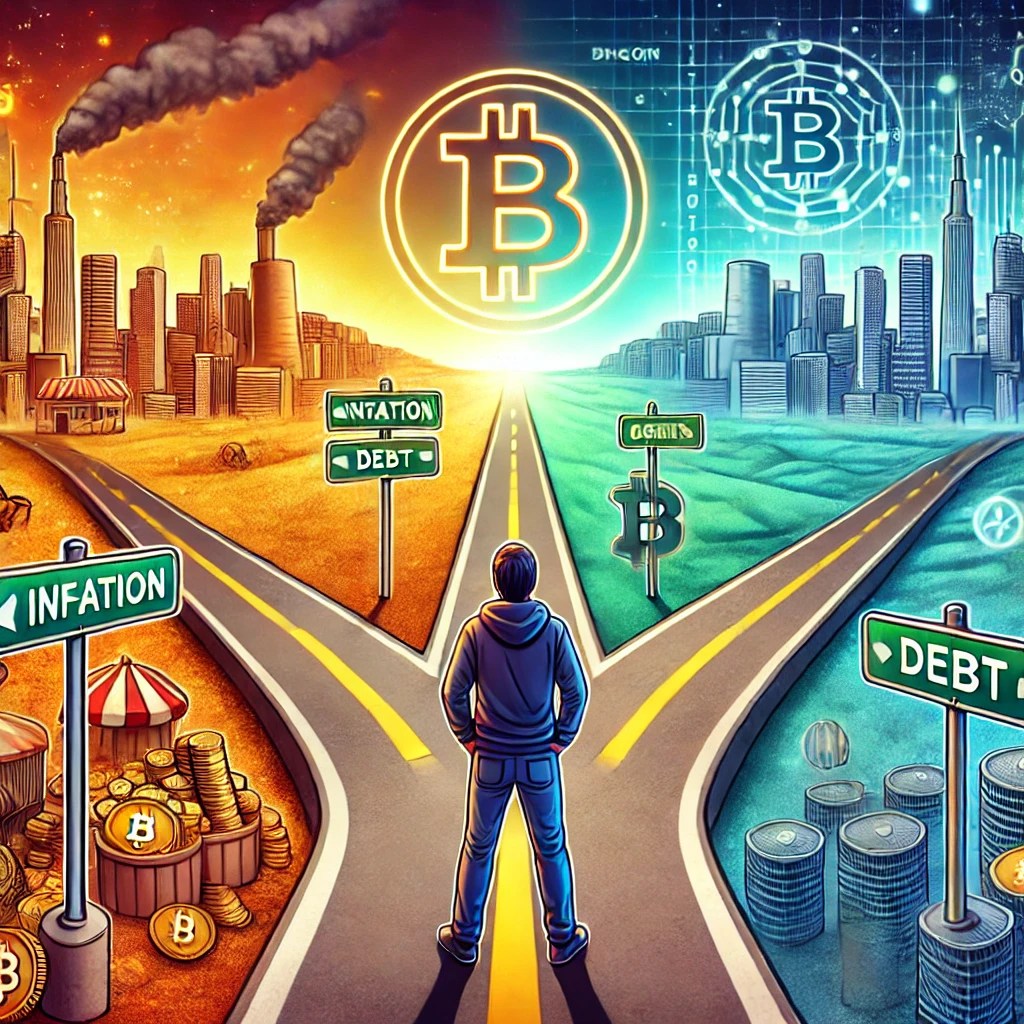
Self-Doubt: Stuck in the Fiat Matrix
Being stuck in the fiat system is deeply personal. It’s in our nature to experience self-doubt, which keeps many people from considering that they might deserve something better. So they remain trapped in the system, accepting its flaws. Most people don’t think they deserve or are capable of something better than the fiat world. They don’t question whether there could be a world beyond fiat, a world where money isn’t constantly devalued, and savings aren’t eroded by inflation. They see the corrupt system but, instead of challenging it, they accept it, thinking, “This is just how things are.”
The fear of the unknown and the comfort of familiarity keep them tied to fiat. They convince themselves that there’s no better option, that the endless cycle of debt, inflation, and money printing is just the way things are. This self-doubt acts like a barrier, preventing them from seeing the reality of a better world—a world based on hard, sound money, like Bitcoin.
Holding on to the Past: Our Own Relatives
When we talk about breaking free from the fiat system, it’s not just about leaving behind old habits—it’s about recognizing that the people around us, often those closest to us, are still stuck in that system. They’ve accepted it, and in their minds, it’s the only reality. For many, stepping into a new financial world like Bitcoin feels like leaving behind their loved ones. There’s a fear that by embracing something new, they’ll lose their connection with those still in the old system.
The people around us will question our decisions. And since so much of our lives are interlinked with money, it’s hard for people, especially when family is dependent on them, to take the leap of faith into something unfamiliar like Bitcoin.
Questioning the Truth
Most of us go through life without ever questioning the nature of the financial system we’re a part of. We accept it because it’s familiar, ingrained in our daily routines, and rarely challenged in mainstream conversations. But once we begin to question it, we start to see the cracks in its foundation—the endless money printing, the inflation, the devaluation of our hard-earned savings.
Even when we understand the truth, we still find ourselves questioning it, trying to rationalize why the fiat system persists. It’s a deeply ingrained mindset, one that’s hard to shake. Many argue, like Peter Schiff does, that money needs utility—he claims Bitcoin can’t be money because it doesn’t have inherent use beyond being a digital asset. But this argument falls flat when we examine what truly gives money its value.
Money doesn’t need utility; it needs to be scarce. That’s the key feature that makes gold valuable—it’s not because gold is used in electronics or jewelry, but because it’s scarce and hard to come by. People buy gold for its scarcity, not its utility. Similarly, Bitcoin’s value lies in its scarcity, capped at 21 million coins, which ensures it remains a finite resource in the digital world. Despite this clear truth, people still cling to fiat, questioning Bitcoin’s legitimacy in the same way they fail to see the inherent flaws of the fiat system.

Morally Superior Thinking
Some people, stuck in the fiat system, consider themselves morally superior because they believe Bitcoin is used for extortion, crime, or other nefarious purposes. They ignore the vast benefits Bitcoin offers, such as providing a stable store of value for people in Africa who are being extorted by financial systems, or enabling low-cost international remittances.
They refuse to see how Bitcoin can empower young people who have been robbed of their savings by inflation or help those trapped in financially corrupt systems. Instead, they cling to their outdated belief that fiat is morally superior, ignoring the harm it causes and the opportunities that Bitcoin presents.
Fear of Alienation
Lastly, there’s the fear of alienation. Choosing Bitcoin over fiat can feel like a lonely road. You might worry that by stepping away from the mainstream financial system, you’ll alienate friends and family who are still trapped in the old ways. How can you be happy if the people you love are still living in the matrix of fiat?
The truth is, embracing Bitcoin might distance you from those who don’t understand it. But just because it’s a path less traveled doesn’t mean it’s the wrong path. True happiness comes from financial sovereignty and the peace of mind that you’re no longer at the mercy of a system designed to fail.
Conclusion
Breaking free from the fiat system isn’t just about making a financial shift; it’s about changing your entire mindset. It’s about questioning the truths you’ve been taught, recognizing the value of scarcity, and understanding that there’s a better way forward. Embracing Bitcoin isn’t about being morally superior; it’s about finding freedom in a world that thrives on control. And yes, it might be a lonely road, but it’s one worth traveling.
 Siddarth Shukla
Leave a comment