How Doubt and Fear Poison Progress
In today’s fast-paced world, success often comes with a side of skepticism. Whether it’s in business, leadership, or personal relationships, people are quick to judge the motivations of others. When someone stands out—working hard to solve problems, innovate, or lead—there are always voices in the background casting doubt, questioning whether they’re in it for the right reasons.
At the heart of this skepticism is negativity—a mindset that doesn’t just question but undermines. People with negative attitudes often project their own doubts and insecurities onto others, assuming everyone is driven by greed, power, or personal gain. This negativity doesn’t just affect their outlook; it spreads, casting a shadow over every interaction and opportunity.
The Projection of Doubt

We’ve all met someone who seems to question everyone’s intentions. You might hear them say things like, “They’re just in it for the money,” or “They don’t care about anything but themselves.” These comments, often delivered with a heavy dose of cynicism, aren’t just observations. They reflect the person’s own inner doubts and insecurities.
Take, for example, an entrepreneur working tirelessly to create a product that solves a real problem. To the outside observer, it may seem like this person is driven by greed—chasing money or power. But the truth is often more complex. While success and financial gain are part of the equation, there’s usually a deeper motivation behind it—whether it’s passion, purpose, or a desire to help others.
Yet, those with a negative outlook can’t see past their own cynicism. They project their doubts onto the entrepreneur, casting them as someone driven by self-interest. This projection of doubt not only harms the person doing it but also creates a toxic environment where genuine intentions are questioned, and progress is slowed.
A Defeated Mindset: Stuck in Inaction
What’s common among these individuals is that they often come from a defeated mindset. Usually, these people either don’t have clear goals or, if they do, they constantly sabotage themselves by overthinking and convincing themselves not to act. They get caught in their own mental traps, stuck in a cycle of doubt and procrastination.
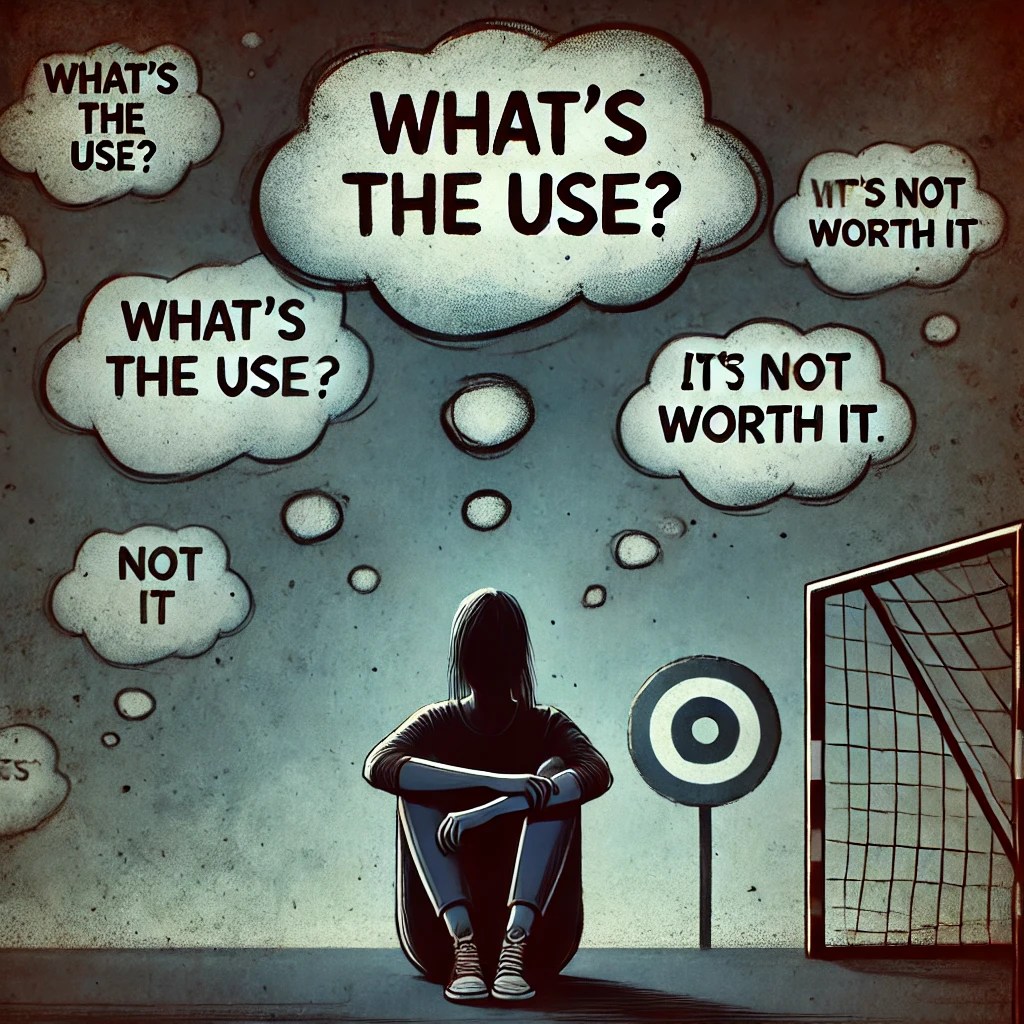
Instead of pursuing their own ambitions, they become spectators—watching others take risks and make progress while telling themselves, “It’s not worth it” or “They’re only doing it for the money.” Their negative mindset keeps them in a place of inaction, where they fail to set or achieve meaningful goals, and this defeatist attitude leads them to criticize those who do.
This lack of self-direction often fuels their projection onto others. They criticize the efforts of entrepreneurs, leaders, or even family members because deep down, they’re frustrated with their own inaction. Their doubts and insecurities manifest as negativity, creating a barrier to their own growth and the success of others.
The Sound and Look of Negativity
Negativity isn’t just a thought—it’s something you can see and hear. When someone is consumed by doubt, their words and actions reflect it. They often use dramatic expressions of despair like “This is pointless” or “What’s the use?” This tone is heavy, pessimistic, and draining.
People who sound negative often look negative too. Their body language, facial expressions, and energy reflect their internal state. This creates a visible cloud of pessimism that affects not only them but everyone around them. It’s the kind of energy that pulls people down, making it harder to stay focused or positive.

Negativity as a Self-Fulfilling Prophecy
One of the most dangerous aspects of negativity is how it becomes a self-fulfilling prophecy. When someone continually questions the motivations of others, they eventually create a reality where people distance themselves, opportunities dry up, and collaboration becomes impossible. In business, this means missed partnerships or stalled projects. In relationships, it means mistrust and conflict.
By doubting the intentions of others, these negative individuals push people away, making it harder to achieve the very success or harmony they crave. They set themselves up for failure, and in doing so, they confirm their own negative beliefs. This cycle of negativity feeds itself, leaving the individual stuck in a loop of doubt, fear, and frustration.
Breaking Free from the Negativity Trap
The first step in breaking free from this trap is recognizing that negativity and doubt are often reflections of our own inner insecurities. When we project our fears onto others, we distort reality, creating a world where trust and progress are impossible.
To break this cycle, we need to start by challenging our assumptions. Instead of assuming the worst in others, we can choose to approach situations with an open mind, recognizing that motivations are often complex. Not everything is driven by greed or selfishness.
We also need to be mindful of our own tone and energy. Are we sounding or looking negative? Do our words and body language reflect doubt and pessimism? By making small changes in how we communicate and perceive the world, we can shift the energy from negative to positive.

Conclusion
The negativity trap is one that many of us fall into, often without realizing it. By projecting our doubts onto others, we create a world where trust, collaboration, and progress are harder to achieve. But by challenging our assumptions, recognizing the complexity of motivations, and adopting a more positive outlook, we can break free from this cycle and move forward with clarity and confidence.
 Siddarth Shukla
Leave a comment