The 21-day sleep challenge was a personal experiment I set for myself to fix one of the most fundamental aspects of my life: my sleep schedule. The goal was simple—wake up before 5:30 AM every day, no matter when I went to bed. By committing to this routine, I aimed to reclaim control over my day and, ultimately, my life.

Introduction
Have you ever felt like you’re stuck in a cycle where the day controls you instead of the other way around? I’ve been there too. Today, I completed a 21-day sleep challenge—a personal experiment aimed at fixing one of the most fundamental aspects of my life: my sleep schedule. But this wasn’t just about waking up early; it was about reclaiming control over my day and, ultimately, my life. Before diving into why I chose to start with sleep, let me give you a brief background to explain why self-mastery is inevitable at this stage of my life.
I’m at a crossroads, facing several major life changes. I’m newly married, and with our first child expected in February next year, financial pressures are mounting. All my savings are in Bitcoin, and my 401k is invested in MicroStrategy stock—decisions I firmly believe in but that come with risks. We also live in a small home, which isn’t big enough for a growing family, adding another layer of pressure. On top of that, marrying someone outside my culture—a non-Indian woman—has stirred up challenges within my family, creating an emotional struggle I’m still navigating.

With these personal and financial pressures building, I’m also considering a career change. I need to balance this shift with maintaining a healthy lifestyle, which has become increasingly important to me. With all these changes converging, I realized that finding balance and strength within myself was essential. Self-mastery wasn’t just a goal; it became a necessity for navigating these challenges.
Why I Chose Sleep as the First Step
Rather than attempting to overhaul my work schedule, diet, workout routine, finances, or career all at once, I decided to start with sleep. I wanted to build patience and avoid the pitfalls of taking on too many challenges simultaneously. In the past, I’d attempted to change multiple habits at once, but one mistake would cause a ripple effect, derailing everything.
I chose 21 days for this challenge because it symbolizes the 21 million Bitcoin—a number that represents scarcity and value. Just as Bitcoin is valuable because it’s limited, time is valuable when it’s structured intentionally. I’ve also heard that it takes 21 days to build a habit and create a groove in the brain. This concept resonated with me, so I decided to put it to the test by starting with something foundational—my sleep.

I started with sleep because it sets the boundaries for my day. Life, to me, is like a playground where each day is a game of self-mastery. For the game to work, there need to be clear boundaries—time and space that frame how I engage with the day. By setting my sleep schedule as the boundary, I could define the start and end of my game time, allowing me to structure the rest of my day intentionally.
The one rule I set was straightforward: I could go to bed anytime, but I had to be up before 5:30 AM. This consistency became more important than having a fixed bedtime, as it anchored my day and allowed me to build the structure I needed to regain control. During these past 21 days, the latest I went to bed was 11:30 PM, and even then, waking up at 5:30 AM wasn’t difficult. Setting a consistent wake-up time gave me the structure and consistency I needed to manage my day with intention.
The Benefits We Already Know of Waking Up Early in the Morning
After 21 days, the benefits we often hear about waking up early became not just concepts but real, tangible improvements I experienced firsthand. Here are the key advantages:
- Productivity Boost: The quiet, distraction-free time in the morning allowed me to plan my day and focus on important tasks, leading to increased productivity and a sense of accomplishment.
- Mental Clarity: Early mornings gave me space for meditation and writing, enhancing my focus and setting a positive tone for the day.
- Discipline and Momentum: Consistently waking up early built self-control, naturally extending into other areas of my life like my fitness routine and work schedule. This momentum kept me on track with other commitments.
- Structure and Boundaries: By establishing a set wake-up time, I structured my day and took control of my schedule rather than reacting to external demands.
- Improved Mood and Energy: Though I initially worried about feeling exhausted, my body adapted, and I found that my energy and mood improved. The satisfaction of starting the day with intention positively impacted my well-being.
The Lesser-Known Benefits of Waking Up Early
While the commonly discussed benefits of waking up early are powerful, there are deeper, lesser-known advantages I experienced during my 21-day challenge. One of the most significant is an increase in sensitivity and self-awareness.
Waking up early with intention made me more attuned to my surroundings and my inner state. I became more sensitive to tasks I had overlooked, like organizing my environment or refining areas of my home. This sensitivity extended to my interactions; I found that if I was reluctant to spend time with someone who didn’t align with my well-being, the discomfort was amplified. This heightened awareness allowed me to see which habits, spaces, and interactions truly served my growth.

Another unexpected benefit was the improvement in my sleep quality. Unlike before, when I’d toss and turn, I now fell asleep almost instantly. The deeper, uninterrupted sleep made my mornings even more refreshing, reinforcing my commitment to maintaining this new routine.
Interestingly, I didn’t notice a consistent change in excitement or motivation. However, on a few days, I felt a peaceful joy that was subtle yet profound. This calm contentment stood out because it wasn’t tied to any external event or achievement; it was just a steady state of well-being.

This heightened awareness and sense of calm led me to an important realization: I needed to take ownership of my time when I’m awake, just as I took ownership of my sleep. Creating my own calendar became an extension of the boundaries I set for my sleep schedule. By structuring my day intentionally, I could ensure my time was honored and aligned with my priorities, translating the discipline of my sleep challenge into my waking life.
Additionally, I noticed that the opportunity cost of messing up my day increased. Waking up early is an investment in good habits and structure. After putting in that effort, I became less inclined to waste my day on bad habits or unproductive activities. It felt like I had already invested so much that I didn’t want to undermine it with poor decisions. This mindset shift reinforced my commitment to maintaining productive and positive behaviors throughout the day.
Measurable Change
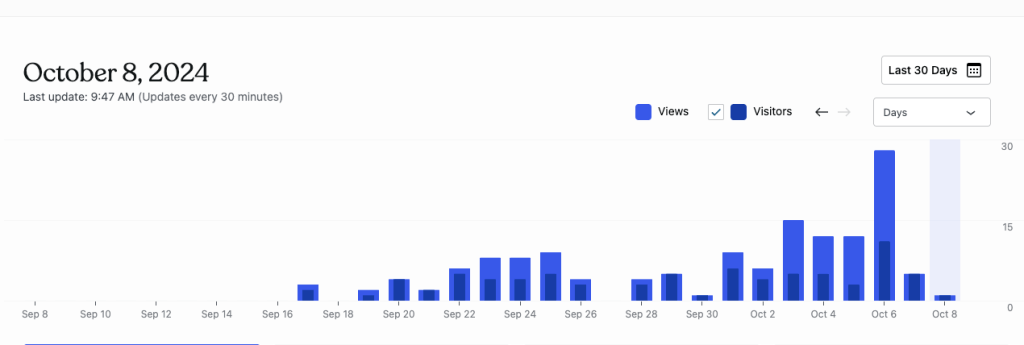
Waking up early gave me valuable time in the morning to introspect, write my blog consistently, improve its content, and promote it on X. This extra time allowed me to be more focused and intentional in my work, leading to measurable progress. The impact of this effort is reflected in the numbers, as I’ve seen an increase in visitors to my blog over the past 21 days. It’s a tangible demonstration of how discipline in one area can create momentum and success in others.
Moving Forward: My Next Challenge
As I reflect on the benefits and insights gained from waking up early, I sense that my next challenge should be what I call a “sacrificial rite.” This will involve letting go of something that no longer serves me for 21 days. It feels like a natural progression—from building a habit to consciously releasing one—to deepen my journey of self-mastery and create space for further growth.
Conclusion
If you’ve felt the need to regain control over your life, I encourage you to start with one small but foundational change, like your sleep schedule. See how this simple shift can ripple through other areas of your life, setting you on the path toward self-mastery.

 Siddarth Shukla
Leave a comment